Experience
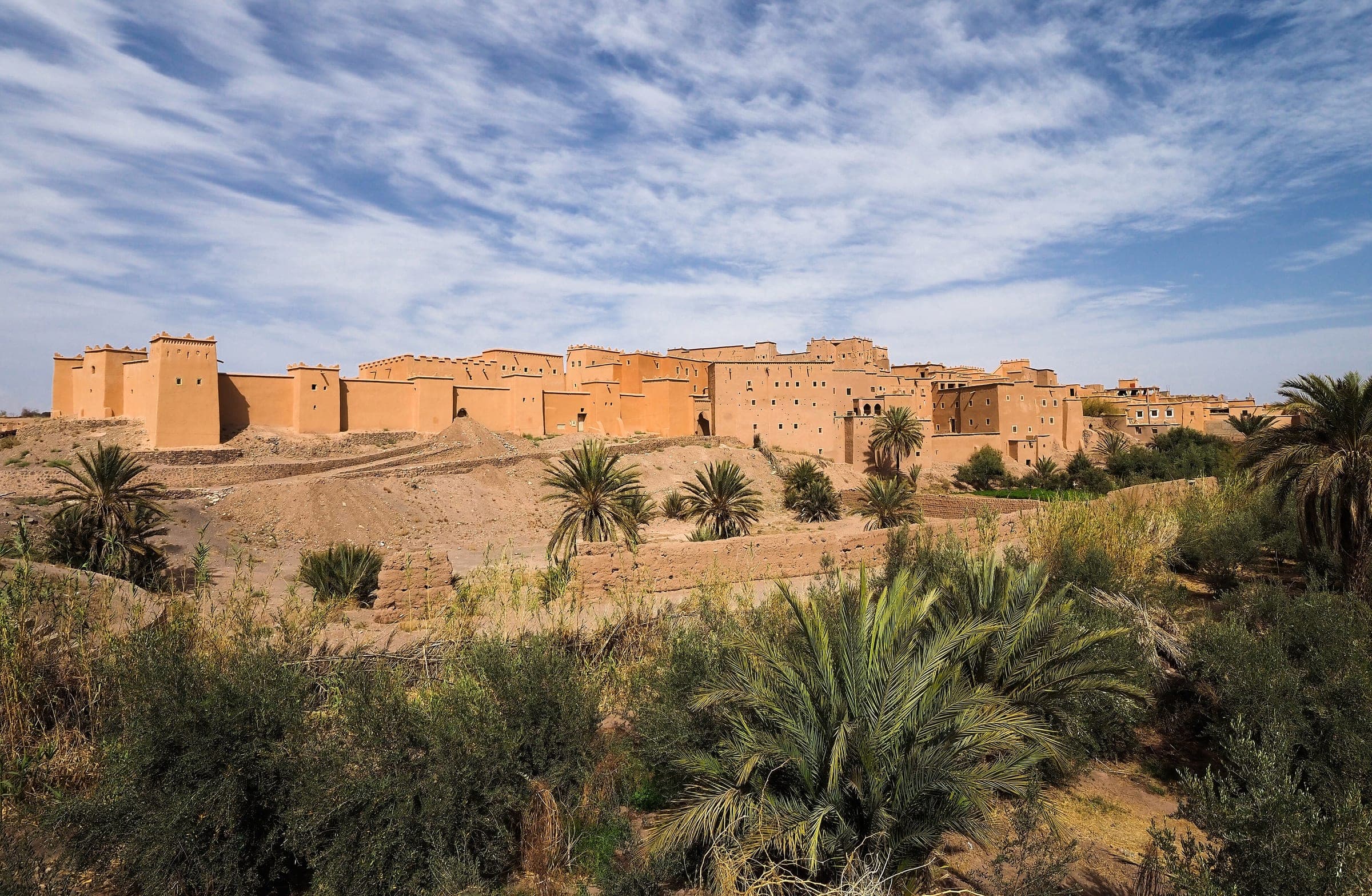
The gateway to the desert at about 1,150 metres, between the High Atlas, the Draa valley and the film studios.
Ouarzazate is the unavoidable stop between Marrakesh and the south-east: the road crosses the Tizi n'Tichka pass at 2,260 metres, then drops onto the plateau. Allow about 200 kilometres from Marrakesh and four hours of driving, a mountain road being slow by nature.
The town has lived off cinema since the 1960s. Atlas Studios, opened in 1983, and the studios nearby have hosted many international shoots, and the region's landscapes are recognisable in plenty of films supposedly set elsewhere.
It is above all a crossroads: the ksar of Ait Ben Haddou is some thirty kilometres to the north-west, the Draa valley runs south towards Zagora, and the Dades and then Todra gorges open to the east.
A 19th-century earthen kasbah, once a Glaoui residence.
Film studios opened in 1983; some of the sets can be visited.
A ksar UNESCO-listed since 1987, some thirty kilometres away.
A palm grove in a gorge some fifteen kilometres from town.
A reservoir on the Draa, east of the town.
One of the largest solar plants in the world, north of the town.
March to May and September to November. Summer often passes 40 °C, and winter nights approach freezing at this altitude.
It is the logical stop between Marrakesh and Merzouga, halfway along. A night there also lets you see Ait Ben Haddou early or late in the day, when the light is low and the crowds thin.
Atlas Studios is open to visitors and keeps some of the sets built for international productions. The region has been filming since the 1960s, and several outdoor sets survive nearby.
No, it is a semi-arid plateau at about 1,150 metres. The great dunes of Erg Chebbi are still some 350 kilometres east, and those of Chegaga to the south, down the Draa valley.